Short Link or Full URL: When Shortening Helps and When It Hurts
Shortening is not automatically better. Here is where a short link genuinely wins, where the full address is the stronger choice, and the one risk nobody selling shorteners mentions.

Michael Page · Published Oct 7, 2026 · 4 min read

Short links are treated as an automatic upgrade. They are not. They are a trade: you give up a readable address and you get back length, flexibility and a count.
Sometimes that trade is obviously right. Sometimes it quietly costs you clicks.
Where shortening genuinely wins
- Anything printed. Nobody types a hundred-character URL off a poster. A short link is the difference between a readable address and a decorative one.
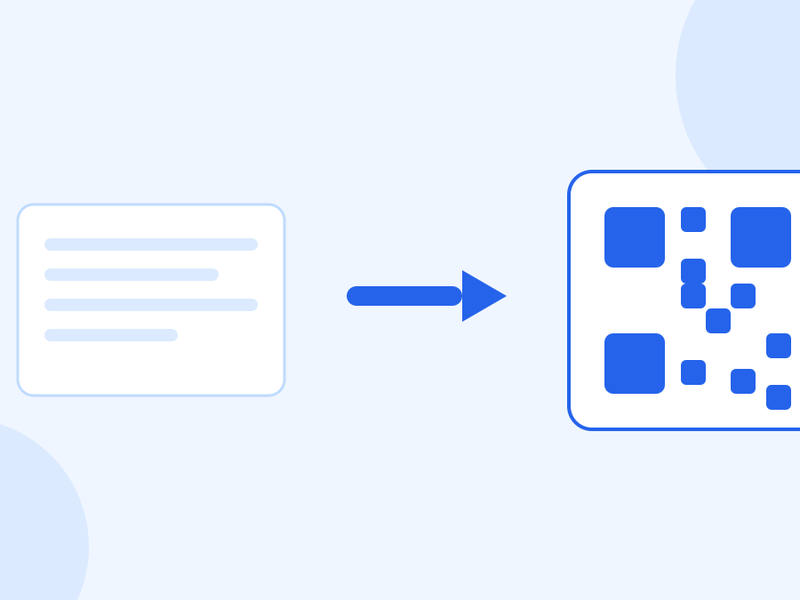
- Inside a QR code. A shorter address makes a less dense pattern, and less dense patterns survive small print and bad light far better. This is the most practical reason of the lot.
- Anywhere with a character limit. An SMS, a bio, a classified ad.
- When the destination might move. You can repoint a short link. You cannot repoint a printed URL.
- When you need to know if anyone clicked. The redirect is counted whether or not the destination page loads analytics.
Where the full address is better
- In email, especially cold email. Shortened links are a spam signal, both to filters and to people. A recognisable domain gets clicked; an opaque one gets deleted.
- Where the URL itself reassures. A link to a government form or a bank is more convincing as the real address. Hiding it is exactly what a scam does, and readers have learned that.
- In messaging apps and social posts. Most platforms generate a preview card from the destination. Some follow a redirect to build it; some do not, and you lose the image and the headline.
- Between your own pages. An internal link should be the real URL. Routing your own navigation through a redirect helps nobody and adds a hop.
What a click actually records
Worth being precise, because "link tracking" sounds more invasive than it is.
A click here stores the time, the page that referred it, an approximate country, city and region, and the browser, operating system and device type.
It does not store who clicked. The visitor's address is kept only as a salted hash — the address itself is never written down, never stored and never shared. That is enough to tell a poster from a newsletter, and not enough to identify a person.
If you want the traffic broken down by campaign rather than just counted, that is a different mechanism: UTM parameters tag the destination, and a short link hides the resulting mess.
The risk nobody mentions
A short link is a dependency. It works as long as the service running it keeps working.
That applies to ours as much as anyone's, and it is worth saying plainly rather than leaving you to discover it. Shortener services do shut down, and when they do, every link ever printed through them stops resolving — including the ones on paper that nobody can edit.
- For anything meant to last years with nobody tending it, use the real address. A plaque, an equipment label, an archive record.
- For campaigns, print runs and anything you will replace anyway, the flexibility is worth more than the dependency costs.
The honest rule: shorten what you expect to reprint, not what you expect to outlive you.
Making the short link readable
If you can choose the ending, choose one. "/spring-sale" tells the reader where they are going; "/x7Fq2" tells them to be careful.
Our link shortener lets you set the ending and counts the clicks. A link someone can read out over the phone is worth more than three saved characters.
Questions people ask
Do short links hurt SEO?
Not when they are a proper permanent redirect, which passes ranking signals through. The caveat is that you should not use them for links between your own pages — there is no benefit and it adds a hop.
Why do short links get flagged as spam?
Because they hide the destination, and so do scams. Filters weigh that, and so do readers. In email, prefer the real address.
Does the destination see where the click came from?
Usually yes, as a referrer, though some setups strip it. Tag the destination with UTM parameters if you need that reliably.
Can I change where a short link points after printing it?
Yes — that is the main reason to use one on anything physical.
Are my links or visitors tracked personally?
No. A click records a time, an approximate location, a referrer and a device type. The visitor's address is stored only as a salted hash and never kept as an address.
Shorten for print, for QR codes, and for anything that might move. Use the real address in email, and anywhere the address itself is doing the reassuring.